





Description
The Ancon 500 is a new high-performance tensioning system. It is available in various diameters ranging from 8 mm to 42 mm in carbon steel and stainless steel.
Tension rod systems are increasingly used in building structures both for architectural effect and as structural elements.
Ancon tension rod systems are designed to meet both aesthetic requirements and today’s demanding applications.
CE marking and European technical approval
- High load-bearing capacity
- Carbon steel or stainless steel tension rods
- Rods from 8 mm to 56 mm in diameter
- Variety of tie rod finishes
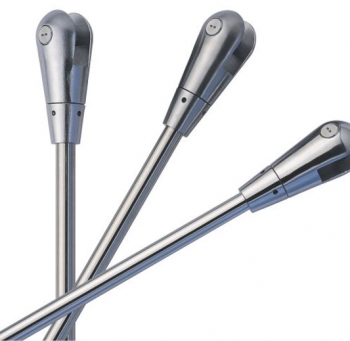
- Aesthetically well-designed forks
- Lock nut included as standard
- Fully seated within fork connectors
- Easy visual verification of correct installation
- Insulation is supplied as standard with stainless steel systems
The Ancon 500 tie rod is a new high-performance tensioning system. The tie rods are available in various diameters ranging from 8 mm to 42 mm, in both carbon steel and stainless steel. All system components can be supplied in a variety of finishes to provide corrosion resistance and to meet the demanding aesthetic requirements of various architectural applications.
The bar used in this system has a minimum yield strength of 500 N/mm².
Surface finish is generally an important factor in applications using stainless steel. Ancon tie rods are designed as standard in a bright finish, but can be hand-polished if required. Stainless steel forks and nuts can be supplied electropolished, satin-finished, or hand-polished.
Insulation of the tie rod system
The insulation material is supplied as standard with the stainless steel system to allow it to be attached to a connecting plate made of a different metal. Each stainless steel fork connector is supplied with two self-adhesive PET (polyester) washers to be applied around the mounting hole on each side of the tie rod. Stainless steel pins with PTFE coating around the section.
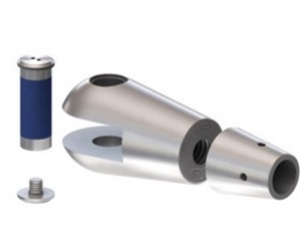
Fork Connectors and Lock Nuts
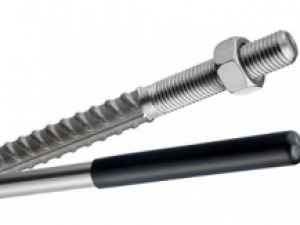
Ancon fork connectors are supplied with a locking nut that provides a clean transition from bar to fork and ensures a secure connection. The internally threaded section of the locking nut is countersunk to allow the threaded end of the bar to be concealed once installation is complete.
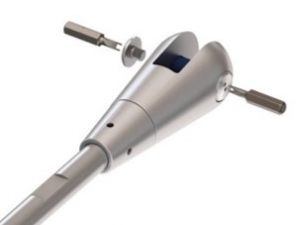
Pins
Each stainless steel fork is supplied with two transparent, self-adhesive PET (polyester) washers to insulate the system from a connecting plate made of a different metal.
The pins are two-piece and, once installed, are aligned with the fork. Installation requires a two-pin driver. This type of fastening, known as ‘Snake Eyes *’, allows high torque to be achieved without damaging the pin.
The stainless steel pins are supplied with a PTFE coating around the barrel to isolate the system from a connection plate made of a different metal.
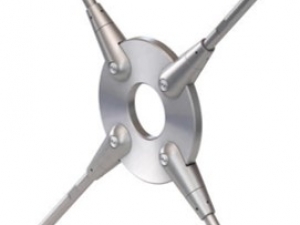
Anchor Discs
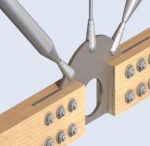
Anchor discs allow up to eight bars to be connected. They can be used in the center of a conventional transverse orthosis or where multiple bars need to be connected at a single point.
We can design and manufacture plates in special shapes to replace standard anchor discs and meet the aesthetic requirements of an application.
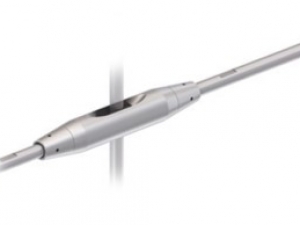
Cross Couplers
When forming a cross brace, a cross coupler offers a simplified alternative to an anchor plate and minimizes the number of fork connectors and lock nuts required. Cross couplers are available in carbon steel and zinc-plated stainless steel to accommodate bar sizes from 10 to 24.
Connecting Bars
Connecting bars have a right-hand thread on one end and a left-hand thread on the other. Flanges are pressed onto the bar near each end. This allows the bar to be screwed into the fork connectors and adjustments to be made at any time after assembly. The availability of each bar size is provided below. All bars are cut with a tolerance of ± 2 mm from the specified length. The maximum bar lengths below are in meters.
Reviews (0)
Related products
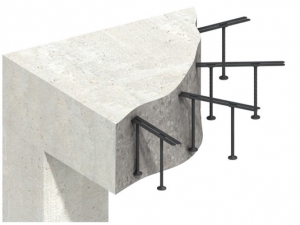


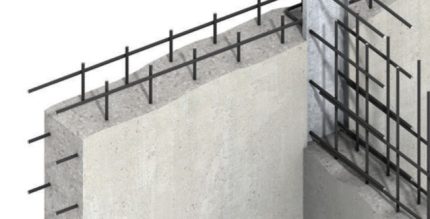
Armor storage boxes
Ancon Leviat EAZISTREAP formwork boxes are designed to ensure the continuity of the reinforcement at the junctions of structural elements in reinforced concrete structures.
Technical Data Sheet
DWG


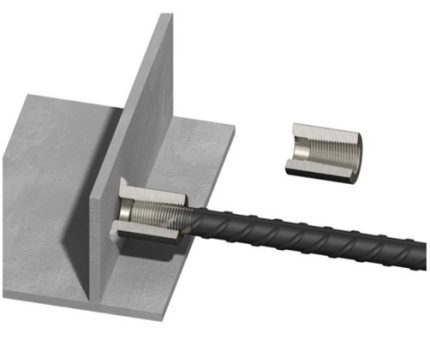
Rod couplers
Splicing is not always the best way to join steel bars in reinforced concrete reinforcement. The use of Ancon Leviat couplers simplifies the design and construction of reinforced concrete structures and reduces the amount of reinforcement required.
Technical Data Sheet
DWG


Stainless steel armor
Reinforcing bars – Coiled reinforcing bars – Molded reinforcing bars – Electro-welded mesh
Steel is the backbone of many structures. Therefore, quality and durability are essential. We also know where and when it is worth choosing specific steel grades.
Technical Data Sheet DWG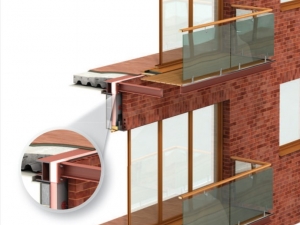


Reviews
There are no reviews yet.