





Description
STATItie – Stainless steel helical rod for reinforcing and anchoring masonry

Anchors or ties can be installed using lime or cement mortar, non-shrink grouts, or chemical adhesives such as epoxy resins. When structural settlement has caused displacement in the masonry, it is appropriate to use the STATItie system by applying it to the drill holes. This hole is filled with GROUT R30N or another grout to fill the hole, into which the STATIie helical rods are inserted by rotation. Thanks to low-pressure injection, the grout will fill the entire space around the borehole.
Application
- Anchoring corner posts or stabilizing perimeter walls by connecting them to the structure and to internal masonry walls.
- The hole depth can reach up to 2 meters and the diameter 12–20 mm.
- Ensuring the stabilization of arches and vaults.
- Using STATItie helical rods to anchor retaining walls and reinforce capitals and column bases.
- Connection between vaulted ceilings and the peripheral support structure
- The application involves drilling holes and injecting Grout 30N at low pressure to fill all voids in the masonry. Next, the STATItie helical anchor rod of the required length is installed.
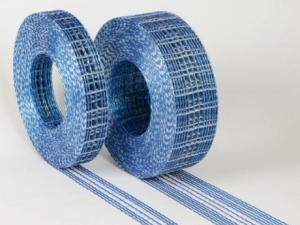
STATIbar – Stainless steel helical bar for longitudinal reinforcement of masonry

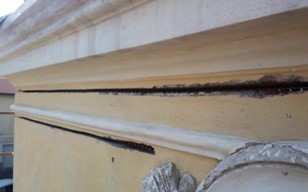
The STATIbar anchor rod is available in lengths up to 10 m and can be installed individually or in groups within the same groove. This installation method allows for the creation of reinforcement lintels without altering the wall’s structural integrity. Individual 1.00 m rods are inserted into individual slots to bridge existing cracks
The Advantages of STATIbar Helical Reinforcement
- Without altering the surface, it allows for minimal cover and does not limit the dimensions of the slots.
- Minimizes design modifications, despite withstanding extreme loads.
- The STATIbar stainless steel helical reinforcement bar is highly flexible and moldable to fit the grooves and alignment of the holes during installation
- A single slot can accommodate multiple bars, thereby increasing the effectiveness of the reinforcements and their load-bearing capacity.
Using the STATIbar helical reinforcement
- When replacing roof structures in older buildings or listed heritage sites, there are no edge beams to support the new roof structure. A very effective and practical solution involves linearly reinforcing the top rows with the STATIbar system, which is inserted into milled grooves at a rate of two pieces per groove in two layers. Without subjecting the facades to extra weight, without altering the architecture of the buildings
- As lintel reinforcement over spans or in the construction of new spans and service ducts.
- To transfer the pressure acting on the opening’s lintel and causing cracks, use two pieces of white-coated reinforcement grooves glued into a single groove in two layers above the opening.
- As reinforcement for transferring forces to micropiles for structural stabilization.
- Transfer of point loads along walls
STATIdry – Stainless steel helical reinforcement for direct fastening to concrete or masonry

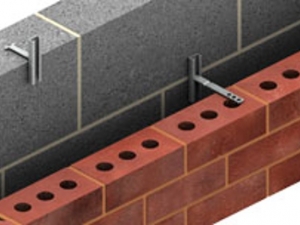
For connecting masonry to rigid structures, solid masonry, or aggregate masonry (standard or composite masonry). It is ideal for securing decorative or additional elements to existing masonry (wooden strips, stone cladding, etc.) without the use of sealants or chemicals, using only dry installation. STATIdry is installed using a special accessory for the SDS hammer drill bit, which gradually screws the anchor into the masonry or concrete. For hard materials (such as concrete or stone), a pilot hole must be drilled beforehand.
STATIdry – Stainless steel helical reinforcement
- STATIdry direct anchors can easily be tested for tensile strength. Simply request the test kit from us.
- Anchoring masonry facades where there is a loss of bricks or stones.
- Anchoring, locking, and reinforcement.
- When securing stone in historically classified heritage sites, the use of STATIdry is imperceptible.
- Reinforcement of loose bricks and load-bearing stone elements (bridges, arches, etc.).
- Bridge construction involves the lamination of individual masonry layers. As a result, the duration of the bending stress causes the curved faces of the bricks to begin to separate. STATIdry is used to secure these bricks.
- For securing wooden moldings to aerated concrete (Ytong, Hebel ATC).
- The unique and easy way to secure and reinforce structural or decorative building elements, d
Applications in Historic Landmarks

STATICAL R30N – Injectable grout for masonry repair and for the installation of helical stainless steel reinforcement bars.
STATI-CAL 30N is a non-shrink, cement-based grout with excellent properties, ideal for application using a manual injection gun. The ratio of powder to liquid ensures consistent properties. Its plasticity is designed to fill any voids during injection. STATI-CAL 30N grout is suitable for fixing metal to masonry in almost all types of masonry, including concrete, bricks, stones, active silica, etc., but above all, it is designed for use with STATICAL’s helical stainless steel bar systems as a fastening element.
30N Stati-cal
Stat-CAL 30N was designed to be an ideal alternative to polyester resin, the use of which could be hazardous in some cases due to its flammability. Skyscrapers are a good example of this. Non-flammable and odorless, 30N grout has other characteristics that surpass those of resins.
The packaging ensures the consistent quality of the mixture with defined properties. The package contains everything you need—there is nothing extra, and more importantly, nothing that needs to be added. This eliminates potential application errors.
It is supplied in 16-liter buckets and contains two components: a powder and a liquid, yielding 3 or 6 liters for application.
Each package contains two components, as well as a 16-liter bucket, to preserve the purity of the mixture. Stat-CAL 30N is available in two basic packages, yielding either 3 liters or 6 liters.

Compressive strength after 28 days 42.6 MPa
Tensile strength after 28 days 8.26 MPa
Compressive strength after 1 day 28.8 MPa
Compressive strength after 3 days 29.6 MPa
Compressive strength after 7 days 43.7 MPa
Bond strength 1.9 MPa
Frost (Cold resistance coefficient after 25 cycles) 98.0%
Volume stability (expansion during hardening) +0.15%
Activity concentration index 0.08-
- Thixotropic. Does not drip when applied to the ceiling.
- Does not shrink. Improves adhesion.
- Packaged to ensure consistent properties.
- Easy to pump, even over long distances.
- Fills the entire available injection space.
- Non-flammable, odorless.
A two-component, thixotropic material intended primarily for the Stati-CAL reinforcement system. It can also be used to fill voids and cracks.
Stati-CAL 30N
Liquid component – A solution of styrene-butadiene copolymers and plasticizers; dry component – Portland cement, mineral filler, plasticizers.
Workability
Temperature: +5°C to 25°C. Working time: approximately 60 minutes after mixing.
Properties
Suitable for manual grouting applications or use with a pneumatic gun. No shrinkage occurs during curing.
Reviews (0)


Reviews
There are no reviews yet.